Working Together
Diagnostic tools and thinking
The lowest-barrier way to work with me is through the diagnostic tools and published thinking I make freely available. The POC Lifecycle Diagnostic maps a proof-of-concept against the Critical Path Layers dependency structure and identifies the layer where it's actually stalling. The articles on the Writing page give each CPL layer its full treatment — they're not thought leadership content, they're diagnostic reference material.
These exist because the diagnostic question ("are you working on the right layer?") should be answerable before anyone books a call. If the POC Diagnostic reveals your bottleneck and you can resolve it without me, that's a good outcome.
Structured Engagements
-
Half-day or full-day sessions that apply Critical Path Layers to a specific transformation challenge. The output is a dependency map and a redirect recommendation — where the effort should move, and what has to be resolved first. These work for leadership teams facing a strategic pivot, corporate innovation teams launching a new programme, and founders preparing for fundraise who need to validate their thesis.
-
For corporate-startup engagement specifically. We can design and deliver various type of workshops across the key themes; ICP, Value Proposition & Value vs Pricing for example. As well as map the POC lifecycle against the corporate's governance and procurement structure. Identifies whether the pilot is designed to produce a contract or a demo — and what structural changes are needed to close the gap.
-
This is how I work inside accelerator programmes: HEC Incubateur's innovation accelerators with L'Oreal (Beauty Tech Atelier), TotalEnergies (ON programme), and Bank of America. Founders get ongoing diagnostic coaching throughout their programme, with sessions focused on identifying which CPL layer they're working on and whether it's the right one.
The difference from conventional startup coaching: I don't optimise the pitch deck or the business plan. I diagnose the structural bottleneck and redirect the effort. -
Working with an entire cohort across a programme cycle, providing both individual diagnostic sessions and cross-cohort pattern recognition. When I can see that three founders in the same cohort are stuck at the same layer, the group diagnostic becomes more powerful than any individual session.
Retained advisory
For specific transformation challenges that require sustained diagnostic work inside a system. This means working with a founder, executive team, or programme lead over weeks or months — long enough to trace the dependencies that don't surface in a single session. Long enough to watch a redirect land and identify the next constraint.
The retained model draws directly on the career evidence in the section above: I've been inside complex commercial systems at operating scale. The advisory isn't observation from outside — it's diagnostic work by someone who has managed the structures being diagnosed.
How these connect
The engagement spectrum isn't a ladder. A retained advisory client might start with a POC Diagnostic. A founder in an accelerator programme might need a single workshop, not six months of coaching. Entry depends on the problem and its structural complexity, not on a services menu or a budget threshold.
The diagnostic question is the same at every level: are you working on the right layer?
Testimonials
-
![]()
"Combines sharp strategic thinking with no-nonsense communication; focuses on business outcomes — no BS."
Celia R., Operating Partner, VC
-
![A man with dark curly hair and glasses, wearing a dark green sweater, looking thoughtfully to his left, indoors with a blurred white wall and faint plant in the background.]()
"Helped us segment users and structure data analysis; teaches deep interpretation for strategic plans."
Olivier C., CMO, Scaleup (Health)
-
![Woman with short brown hair, glasses, in a yellow dress and purple cardigan, standing outdoors with green foliage in the background, leaning on a railing.]()
"Brought sharp insights, creative thinking, and deep expertise across UX, AI, and wider tech landscape."
Sara M., Change & Transformation, Enterprise (UK)
-
![A man leaning against a beige wall outdoors on a sunny day, wearing a white short-sleeved polo shirt and black pants.]()
"Everything must be constructed, thought through, and verifiable — pushes you to clarify and act."
Dan B., COO, Enterprise
-
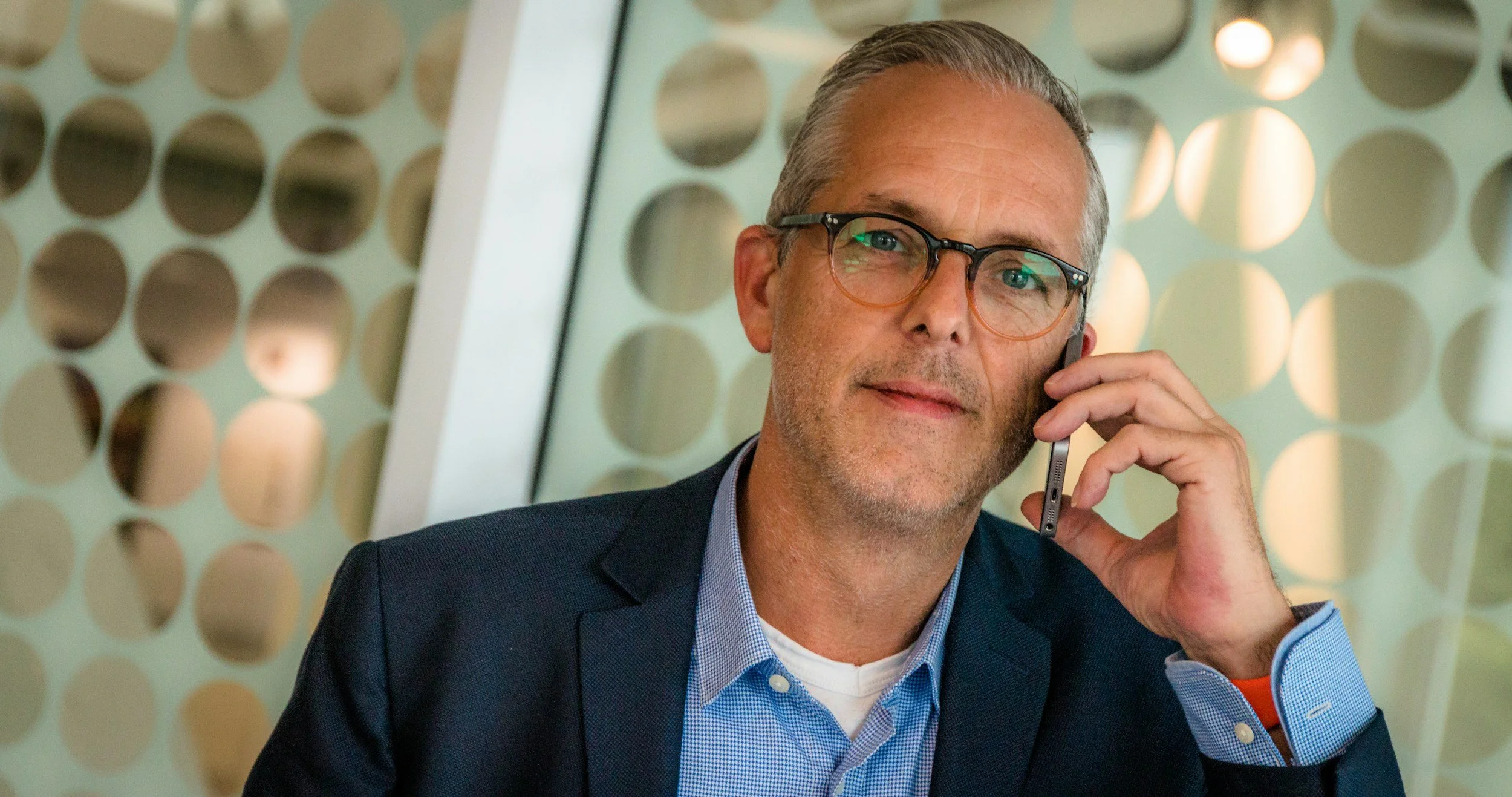
![A middle-aged man with gray hair, glasses, wearing a navy blazer and light blue shirt, talking on a smartphone in an office with a modern, circular-patterned partition in the background.]()
"Incredibly customer-centric in product design; understands customer needs often lost in orgs."
Liam D., PMO, SMB (UK)
-
![A smiling woman wearing glasses, hoop earrings, and layered necklaces indoors.]()
"Rare ability to cut through marketing noise to focus on what really matters — the value proposition."
Roshan B., CEO, Startup (B2C)
-
![]()
"Superpower is quickly creating trusted relationships; helps find your vision but better constructed."
Alexandre G., CEO, Startup (B2B)